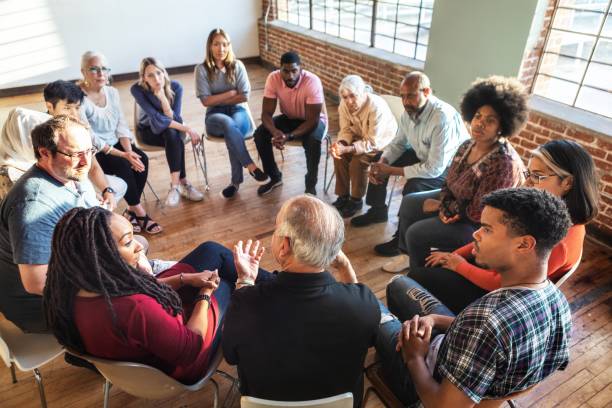
A support group is where members offer support to others and receive support from others, displaying empathy and understanding because of shared experiences.
Groups are incredibly diverse unless designated for a specific audience, like caregivers, teens, partners, etc. Participants range from first-timers with a new brain injury to others dealing with chronic symptoms over many years.
Brain injury does not discriminate. Usually invisible to others it is an equal opportunity silent disability
Unless otherwise specified as a presentation, seminars, or other format, everyone in the group is considered a peer. There is no single expert but a facilitator usually guides discussion to ensure everyone who wants to speak is recognized and has the opportunity.
Individuals are safe to say what they feel and think and to be accepted by the group. Usually there is not one right or wrong way. What works for one person may not be right for everyone and what’s shared in support group, stays in support group.
TBI survivors and caregivers often have similar experiences and emotions. Emotions are neither shameful nor abnormal, they just are. Sharing them can be liberating and comforting.
Support groups provide a way to talk through problems and look for possible solutions. The resourcefulness, creativity and perspective of others can be helpful when you feel stuck or need practical suggestions.
Last but not least, support groups are social events, particularly since COVID. People feel like they’re meeting with friends, old and new, and having a pleasant experience. If a support group does nothing else, it provides a community connection to break the isolation so common after brain injury.
Objectives of a support group:
Offer support through understanding and empathy
Share insights about similar experiences
Discuss problems using the combined wisdom of group members
Celebrate good times and be there during bad times
Peer support works
“When someone really hears you without passing judgment on you, without trying to take responsibility for you, without trying to mold you, it feels damn good.
When I have been listened to and when I have been heard, I am able to reperceive my world in a new way and go on. It is astonishing how elements which seem insoluble become soluble when someone listens.”
Carl Rogers
Cookie Consent
We use cookies to improve your experience on our site. By using our site, you consent to cookies.